
A Beginner’s Guide to Wenwan Walnuts

Discover what Wenwan walnuts are, why collectors value them as matched pairs, how beginners can compare shell shape, texture, condition, and size, and how clean handling and careful storage support gradual changes in color, surface luster, and patina. This plain-English guide also explains common variety names without treating them as proof of species, origin, age, rarity, or value.

What Is a Wenwan Walnut?

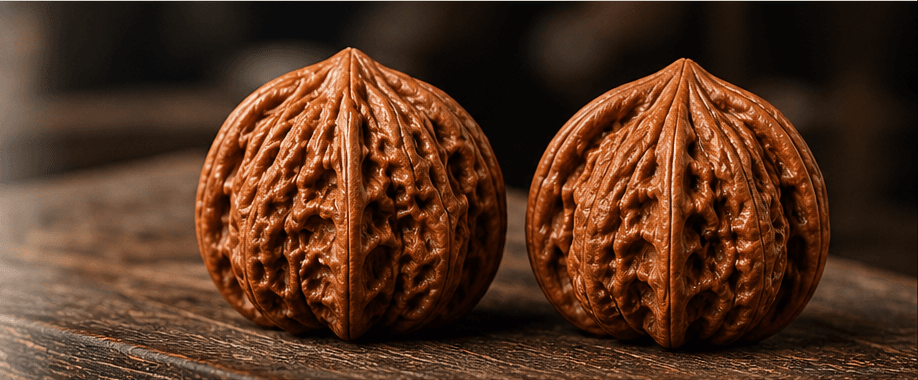
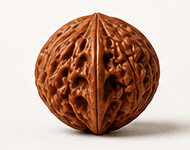
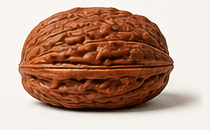
A Wenwan walnut is selected for its shell rather than primarily for its edible kernel. Collectors study its overall shape, natural texture, condition, size, and how well it matches another walnut. A pair is usually handled in one hand and appreciated as both a tactile object and a traditional Chinese collectible.

Wenwan walnuts do not belong to one botanical variety. Research has identified several Asian walnut species in the collecting market, including examples associated with Juglans hopeiensis, Juglans mandshurica, and Juglans sigillata. Because natural forms and collector names overlap, a variety label is useful context rather than proof of a walnut’s exact species or origin.

What makes the hobby distinctive is gradual change. With regular, clean handling, high points on the shell can become smoother while its color and surface luster develop over time. Collectors often describe this long-term surface change as patina.

Explore varieties and terminology

Play Walnut

What Does “Play Walnut” Mean?

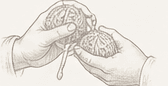
On this site, “play walnut” is a plain-English way to describe Wenwan walnuts and the practice of rotating a matched pair in the hand. It does not refer to a mobile game, and it is different from choosing ordinary walnuts for eating.

“Wenwan walnut” is the more culturally specific term. “Play walnut” helps English-speaking beginners describe the hand movement before they know the Chinese collecting vocabulary. Throughout this guide, both expressions refer to the same general hobby.

Common Wenwan Walnut Varieties

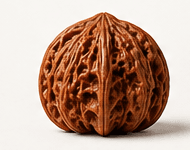
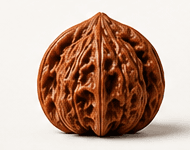
Varieties are commonly described by outline, shoulders, base, tip, ridges, and grooves. Names can vary between regions, sellers, and collecting communities.

Natural variation is normal. Learn to compare what you can actually see before trusting a label.

Compare walnut varieties

How to Choose Your First Pair

A beginner does not need the largest, rarest, or most expensive pair. The best first pair is structurally sound, comfortable to hold, and easy to compare.

Check both walnuts for serious cracks, repaired areas, insect holes, unusual coatings, or other visible damage. Then compare height, width, outline, texture, and weight. A matched pair should look related, but natural walnuts will not be mechanically identical.

Choose a size that fits your hand. When buying online, ask for clear photographs from multiple angles, measurements of both walnuts, and an honest description of defects or previous treatment. Prefer a pair whose visible condition and history you can understand; colour and gloss alone do not prove natural handling or quality.

Use the complete selection guide

How to Play With Wenwan Walnuts

Place both walnuts in one palm and use your fingers and thumb to rotate them slowly. The motion should feel controlled and comfortable. There is no need to squeeze hard, move quickly, or make the shells strike each other with force.

Begin with short sessions while you learn how the pair moves. A rounded pair may rotate differently from a broad or strongly textured one. Stop if the motion causes pain or excessive irritation.

People enjoy Wenwan walnuts for different reasons. Some appreciate the quiet, repetitive movement, while others focus on collecting, surface texture, variety, or the way a personal pair changes over time. This site treats the practice as a cultural and collecting hobby, not as medical treatment.

Follow the beginner handling guide

Care

Beginner Care and Natural Patina

Wenwan walnut care should be simple and conservative. Handle the pair with clean, dry hands and remove loose dust from deep grooves with a clean brush. Avoid soaking the shells, exposing them to strong heat, or experimenting with chemicals and heavy coatings.

If the pair becomes damp, stop handling it and let it dry naturally in a ventilated place away from direct heat. Store it in a clean, breathable pouch or container, away from direct sunlight, hot cars, heaters, and sudden environmental changes.

Beginners do not need oil for routine handling. If you do not know how a product will affect the shell, leave it off. Patina develops gradually through handling, oxidation, cleanliness, storage conditions, and time. There is no universal schedule, and patina alone does not prove age, authenticity, rarity, or financial value.

Continue Learning About Wenwan Walnuts

Use the guide that matches what you want to do next.

Clear, Independent Wenwan Walnut Education

Beginner friendly

Core ideas are explained without assuming collecting experience.

Research informed

Botanical and cultural claims are checked against credible references.

Culture with context

Chinese names and traditions are explained without reducing them to sales labels.

Independent and original

One independent editor publishes the guides and original photography; the site does not sell walnuts or promise authentication, value, or investment returns.