 Play Walnut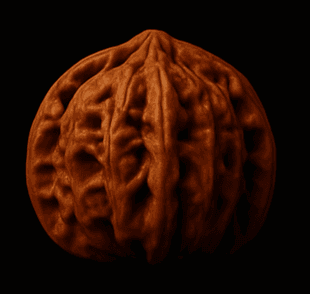
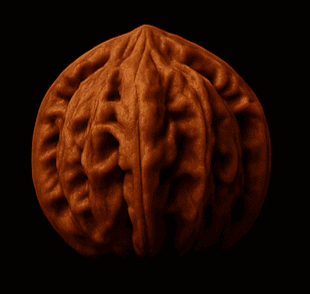
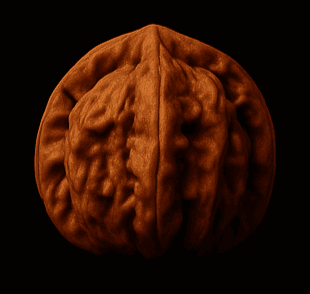
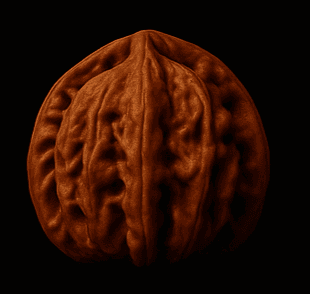
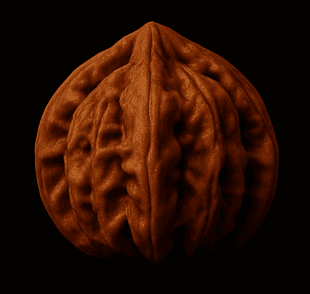
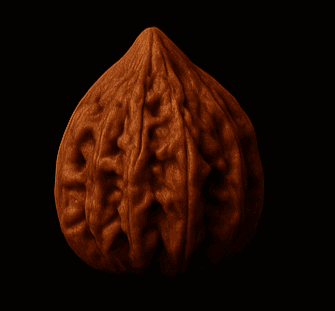
The Legend of Wenwan Walnuts
A Glimpse into History: It is said that the scholarly walnut began its journey as a humble tool for court musicians to maintain the dexterity of their fingers. To everyone’s surprise, years of friction and warmth transformed these rugged nuts into translucent, ruby-like gems with a breathtaking patina (Bao Jiang). What started as a functional exercise soon blossomed into a royal obsession, eventually flowing from the Forbidden City to the streets. As the old saying goes: "A nobleman has three treasures: a thumb ring, a pair of walnuts, and a bird in a cage." A pair of high-quality walnuts became the ultimate hallmark of status for the gentry. Even the Qianlong Emperor was moved to write:"In the palm, the Sun and Moon revolve.
Time itself seems to flow in reverse.
As vital energy surges through the veins
Who could ever fear the coming of white hair?
About the differences:The classification of walnuts is a vast forest of knowledge, but I prefer to distill them into three primary lineages: Ma Walnut (Xiling), Iron Walnut, and Qiu Walnut. Among them, the Ma Walnut is the most cherished by collectors, branching into four classic shapes: The Lion’s Head, The Official’s Hat, The Gentleman’s Hat, and The Chicken Heart.Beyond these, the world of varieties is endless.
Lion’s Head: Famous examples include the Millstone, Starry Sky, Apple Orchard, Four Towers, and the rock-hard Nanjiangshi.
Official’s Hat: Notable for the Wang Yong and Flat-Belly styles.
Gentleman’s Hat: Such as the Panshan or Cui Kai varieties.For a beginner, there is no need to rush. Even seasoned veterans can struggle to distinguish the subtle nuances born from modern grafting. When choosing your first pair, follow your "Yan Yuan" (Visual Destiny)—if they speak to your soul at first sight, they are the ones.
About skin color: Content to be added.
About size:Generally, for walnuts of equal quality, the larger the size, the higher the value. However, one should not blindly pursue scale. The ultimate rule is "He Shou" (Fitting the Hand). It must feel comfortable, a natural extension of your palm, allowing for effortless rotation.Some varieties, like the Kylin-Pattern Official’s Hat, are naturally grand; others, like the Millstone or Yellow-Stem Lion’s Head, are dainty and refined. Choose not what is "expensive," but what feels right in your grip.